Your store is open 24/7. Your customer service shouldn't be closed at 6pm. An AI agent handles inquiries, follows up on abandoned carts, and drives repeat purchases — automatically, at any hour.
Try the agent freeAn online store never closes, but most e-commerce customer service does. A customer asks "will this fit a 2019 Honda Civic?" at 9pm on a Sunday. There's no chat agent, no reply to their email until Tuesday, no way to get the answer they need to complete the purchase. They leave. They find a competitor who either has the answer in a better product description or a chat agent that responds instantly. Your sale goes to someone else.
This is happening dozens — sometimes hundreds — of times per week in e-commerce stores that have great products but inadequate real-time support. An AI agent closes this gap permanently: answering product questions, handling order inquiries, recovering abandoned carts, and following up after purchases to drive the repeat sales that make e-commerce businesses truly profitable.

The three revenue leaks AI agents seal in e-commerce
Leak 1: Unanswered pre-purchase questions
A customer who can't get a product question answered before purchase either buys something that doesn't fit (and returns it, costing you margin) or leaves without buying. An AI agent with deep product knowledge — fed from your catalog, size guides, and compatibility charts — answers these questions correctly, instantly, at any hour. Pre-purchase support is one of the highest-ROI applications of AI in e-commerce because it directly prevents lost sales.
Leak 2: Abandoned carts that never come back
The industry average cart abandonment rate is nearly 70%. Most of these aren't "no" decisions — they're interruptions, second thoughts, and distraction. An AI agent can send a gentle follow-up 45-90 minutes after abandonment: "Hey! You left something in your cart — want me to help answer any questions before you complete the order?" For customers who had a specific concern, this message converts at a surprisingly high rate without requiring a discount.
Leak 3: First-time buyers who never come back
The hardest and most expensive customer to acquire is the first-time buyer. Most e-commerce stores let that customer walk out the door and never reach out again — relying on retargeting ads (expensive) or hoping they remember to come back. An AI agent builds the post-purchase relationship: delivery confirmation, usage tips, restock reminders, and repurchase nudges at the right interval based on the product they bought.
Full customer journey automation for e-commerce
| Stage | Without AI | With AI Agent |
|---|---|---|
| Pre-purchase questions | Email response in 24–48h, or none | Instant answer, 24/7, from product knowledge base |
| Cart abandonment | Generic retargeting ad (expensive) | Personalized message 60–90 min after abandonment |
| Order confirmation | Automated email (ignored) | WhatsApp/SMS confirmation with tracking link |
| Shipping update | Customer logs in to track | Proactive update at each shipping milestone |
| Post-delivery follow-up | None | "How's your order?" + review request at 3–5 days |
| Return/refund | Customer waits 24–48h for process to start | Agent initiates process instantly within your policy |
| Repeat purchase | Ad retargeting (expensive, generic) | Personalized restock reminder based on purchase history |
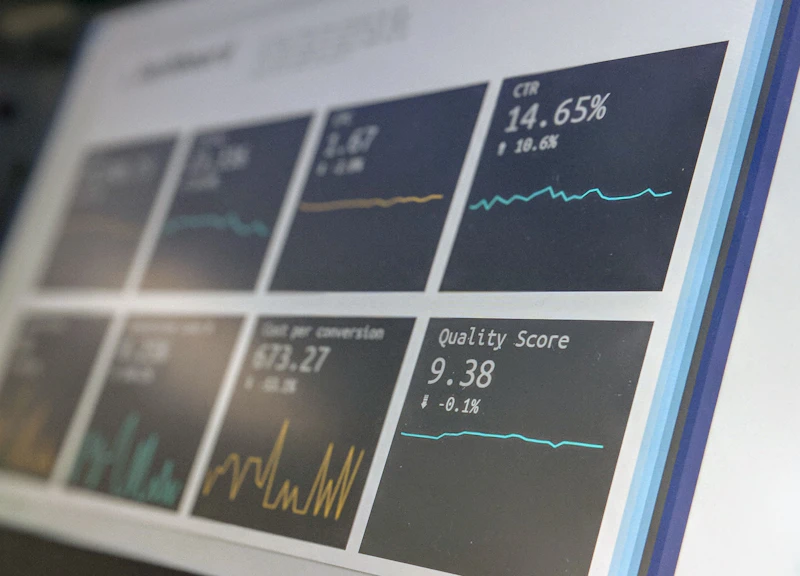
Post-purchase communication: the highest-ROI sequence in e-commerce
The 30 days after a customer's first purchase are the highest-leverage window in e-commerce. Customers who feel taken care of after buying convert to repeat buyers at dramatically higher rates than customers who receive only a shipping confirmation and silence.
A well-designed post-purchase sequence looks like this: order confirmation with enthusiasm (not just a receipt), shipping milestone updates, a delivery check-in at 3–5 days asking how they like the product, a review request at day 7, a complementary product suggestion at day 14, and a replenishment reminder at the appropriate interval for consumable products. This sequence turns a one-time buyer into a lifetime customer — and does it without a single human touch after setup.
Handling returns and complaints: fast resolution beats perfect resolution
Customers who have a problem and get it resolved quickly are more loyal than customers who never had a problem. The key word is "quickly." An AI agent that can immediately acknowledge a return request, collect the order information, explain the process, and give a timeline — even without completing the process instantly — dramatically reduces customer frustration compared to "our team will respond within 2 business days."
Case Study: Groundwork Supply Co., Portland OR
Owner: Natalie Osei | Team: 2 founders + 1 part-time
Natalie ran an outdoor gear and accessories e-commerce store. The store was growing in traffic but struggling to convert visitors who had product questions — and repeat purchase rate was stuck at 22% because post-purchase communication was essentially nonexistent.
| Metric | Before | After (4 months) |
|---|---|---|
| Avg. pre-purchase inquiry response time | 18.4 hours | 44 seconds |
| Cart recovery rate | 4.2% | 18.7% |
| First-time buyer repeat purchase rate (90 days) | 22% | 41% |
| Average review volume per month | 6 reviews | 38 reviews |
| Monthly revenue | $34,200 | $61,800 |
"The cart recovery alone pays for the agent three times over. But the bigger win was repeat purchases — we had no post-purchase follow-up at all before. Now customers feel like there's a real relationship, not just a transaction. Our review score went from 4.1 to 4.7 in four months." — Natalie Osei, founder
Product recommendations that don't feel like spam
The difference between a helpful product recommendation and a spammy upsell is relevance and timing. An AI agent that knows what a customer bought can make recommendations that feel personally tailored: "You ordered our trail running shoes last month — we just launched a matching gaiters set that works perfectly with them." This is fundamentally different from a generic newsletter blasted to your full list.
Personalized post-purchase recommendations from AI agents consistently outperform email campaigns in click-through and conversion rates because the message is relevant and the channel (WhatsApp) has higher open rates than email. Compare this approach to how travel agencies automate repeat client engagement.
Comparison: in-house support team vs. AI agent for e-commerce
| Capability | In-House Support (1 FTE) | AI Agent |
|---|---|---|
| Availability | Business hours only | 24/7/365 |
| Response time | Minutes to hours | Seconds |
| Cart abandonment follow-up | Not done | Automatic, every cart |
| Post-purchase sequence | Generic email template | Personalized per product/customer |
| Return processing initiation | Next business day | Immediate, 24/7 |
| Monthly cost | $3,000–$5,000 | From $200/month |
Frequently Asked Questions
Can an AI agent handle customer service for an e-commerce store?
Yes. The agent answers order status questions, return and refund inquiries, product availability, shipping timelines, and sizing/compatibility questions — instantly, 24/7. Complex situations requiring judgment are escalated to your team with full context already gathered.
How does an AI agent help reduce cart abandonment?
The agent sends a timed follow-up to customers who added items but didn't complete purchase — typically 60–90 minutes later via WhatsApp or SMS — with a helpful message addressing common purchase hesitations. Cart recovery rates of 15–25% are common, compared to the industry's 4–6% with generic email.
Can the AI agent drive repeat purchases?
Yes. The agent tracks purchase history and sends personalized restock reminders, complementary product suggestions, and loyalty milestone messages — prompting customers to return based on what they actually bought and when they're likely to need more.
How does the AI agent handle returns and complaints?
The agent collects order number and issue description, initiates the return process following your defined policy, and keeps the customer informed at each step. Escalation to a human happens only for complex situations — keeping your team free for the cases that truly require their judgment.
Is an AI agent useful for small e-commerce stores?
Especially for small stores. Large retailers have dedicated support teams and CRM systems; small stores need every inquiry answered and every post-purchase opportunity captured without the headcount budget. An AI agent delivers enterprise-level responsiveness at a fraction of the cost.
The math of repeat purchases: why this matters more than traffic
Most e-commerce stores spend heavily on customer acquisition — ads, SEO, influencers — and almost nothing on customer retention. But the math strongly favors retention: a customer who buys twice is worth more than two one-time buyers, because the cost to get that second purchase is near zero compared to the cost of acquiring a new customer from scratch.
An AI agent systematically converts one-time buyers into repeat buyers by maintaining the relationship between purchases. Over 12 months, even a modest improvement in repeat purchase rate — say, from 22% to 38% — compounds into substantially higher revenue without a dollar more in ad spend. Learn how other service and retail businesses are building the same compounding retention advantage with AI agents in our guide on AI agents for subscription and retainer businesses.
Want an AI agent for your business?